Abstract values are so devastatingly easy to forget. And forgotten values are easy to ignore.
In the abstract, I think that democracy and free speech are great achievements and worth protecting. But superficial knowledge often just isn’t very motivating or “action-guiding”. It’s frequently trumped by more concrete and familiar experiences, ideas, “internalised” knowledge and the feelings all these things inspire: I don’t particularly feel great about democracy when the majority seems wrong or uninformed. I get frustrated with endless political discussions.
But, by default, familiarity is just a completely arbitrary criteria. (I often take the ability to disagree with people for granted, in large part because I don’t experience censorship in my daily life. I feel frustrated with endless political discussions, in large part because I haven’t experienced what it would mean for those discussions to be shut down by force.)
This arbitrariness bothers me. Making choices that hinge solely on accidents of birth and geography seems like a recipe for mistakes. While I can’t stop my arbitrary personal experiences – and the familiar feelings they inspire – to shape my decisions, I can deliberately tie my more abstract values to feelings I can tune into. By familiarising myself with the experiences of others and remembering them deliberately, I can calibrate my feelings to more than just my personal experience, but those of others. June fourth has become one of the days that help me do that.
June Fourth
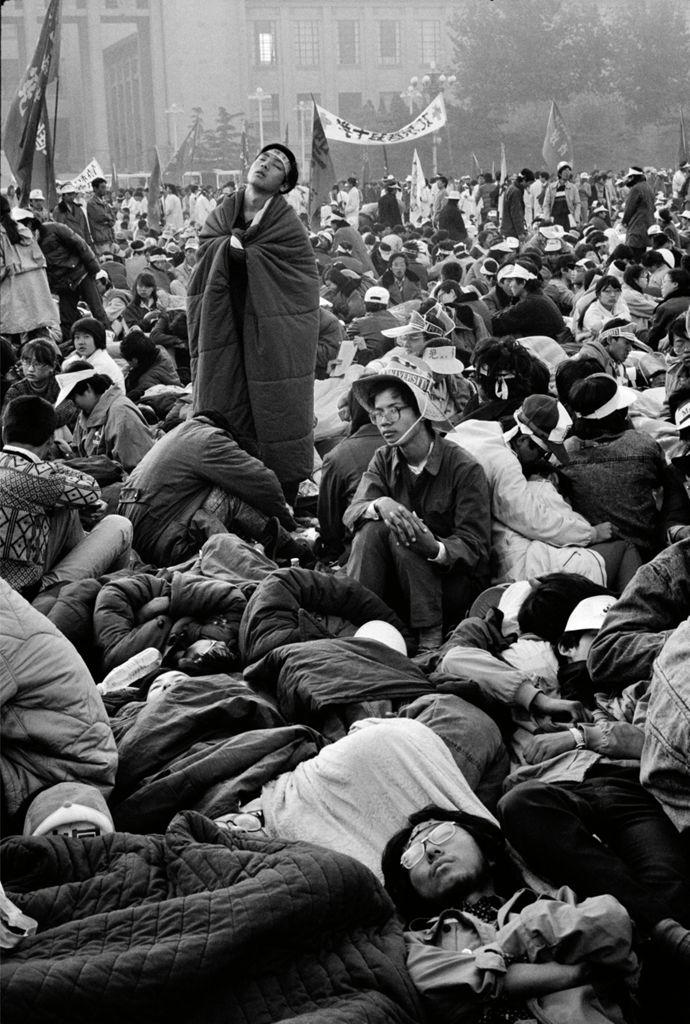
On the night of June 3-4 1989, tanks and armed soldiers fired live ammunition into crowds in Tiananmen square. On the anniversary of the event, I try to make time to read primary sources of what happened that day and its aftermath (0. 1, 1a , ) contemporary diplomatic documents (2, 3, 4,) and historical research on the event and its memory (5, 6, 7). I look at photographs of protestors.
I try to find the songs they sang. I look at contemporary news coverage. (8, 9) I try to think of what it would have been like to be there, in the crowd, hearing bullet shots. And to break down literal barriers to hold a candlelight vigil on June fourth in Hong Kong in 2020.
When I do these things, I viscerally feel myself remembering, re-learning something I didn’t notice forgetting. And I’m always sad and angry at first, then grateful, and then deeply motivated to do something good.
Appendix: Does historical accuracy matter?
Stories are “dual-use”. Historical narratives and fictional stories make some values, arguments or ideas feel so much more viscerally true than others. We can use this tool for positive and negative purposes. Some people might think that true historical stories are better to reference because they are naturally going to lead to more accurate beliefs, and thus better decisions. I don’t think that’s true, but if we just think about stories as a tool to internalise something we already know to be true, and need a visceral reminder of: History – to me – has an advantage, in that there is a lot more content, a lot more material to build on than fiction. Fictional stories can serve as fantastic reminders of abstract values as well (Bedtime stories and fables and bibles exist for a reason), but they’re rarely as detailed as the records we have of true events. (It’s pretty hard to find eyewitness accounts or zoomed in versions of Genesis.).
 Lara Thurnherr
Leave a comment